
Concrete Sleeper vs Timber Retaining Walls in Sydney: Which Is Best for Your Property?
If you’re planning a retaining wall project, choosing the right material is one of the most important decisions you’ll make. For many homeowners, the biggest question comes down to a concrete sleeper vs timber retaining wall comparison for Sydney properties.
Want a quote for either material? Our retaining wall builders in Sydney install both concrete sleeper and timber walls. Book a free site inspection.
Both options are widely used across NSW — but Sydney’s clay-heavy soils, rainfall patterns, and sloped blocks mean durability and structural strength matter more than aesthetics alone.
So which retaining wall material performs better long-term in Sydney conditions? Let’s break it down.
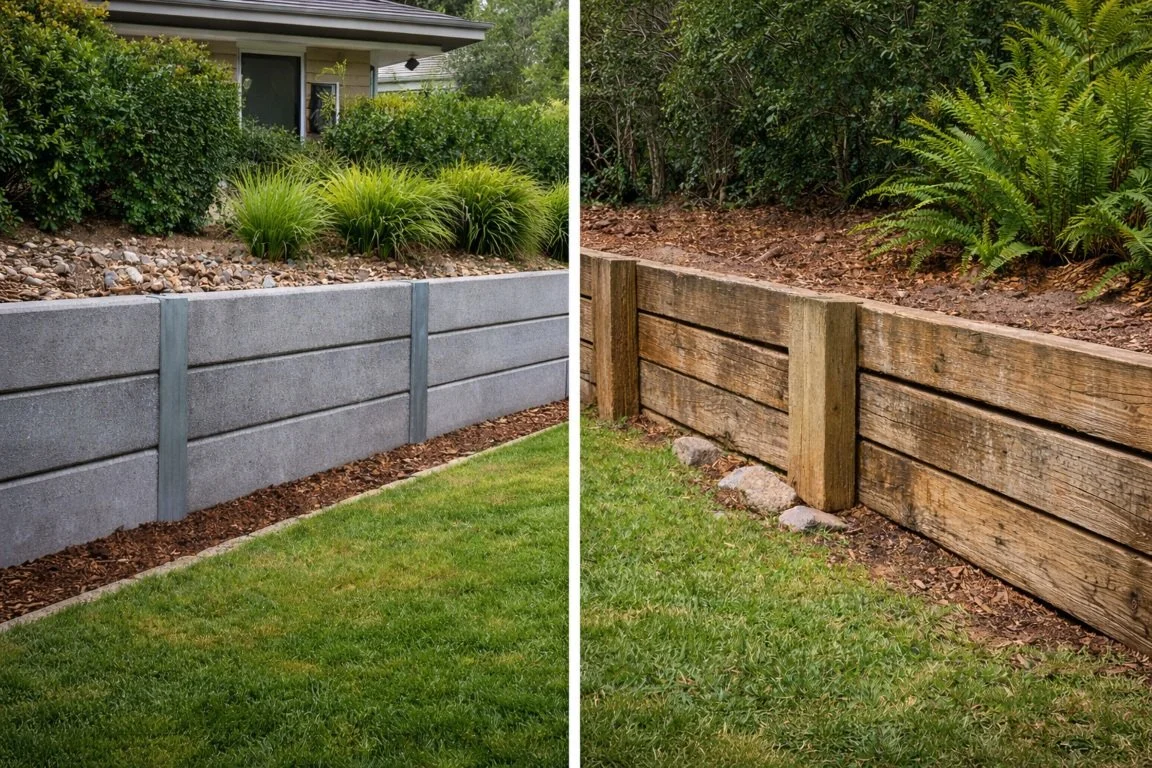
Why Material Choice Matters in Sydney
Sydney properties often deal with:
Expansive clay soils
Sloping or tiered blocks
Heavy rainfall events
Termite-prone areas
Because of these conditions, not all retaining wall materials perform equally over time. Choosing correctly can mean the difference between a wall that lasts decades and one that requires replacement within 10–15 years.
Advantages of Concrete Sleeper Retaining Walls
Concrete sleeper walls have become increasingly popular across Sydney — especially in new builds and structural landscaping projects.
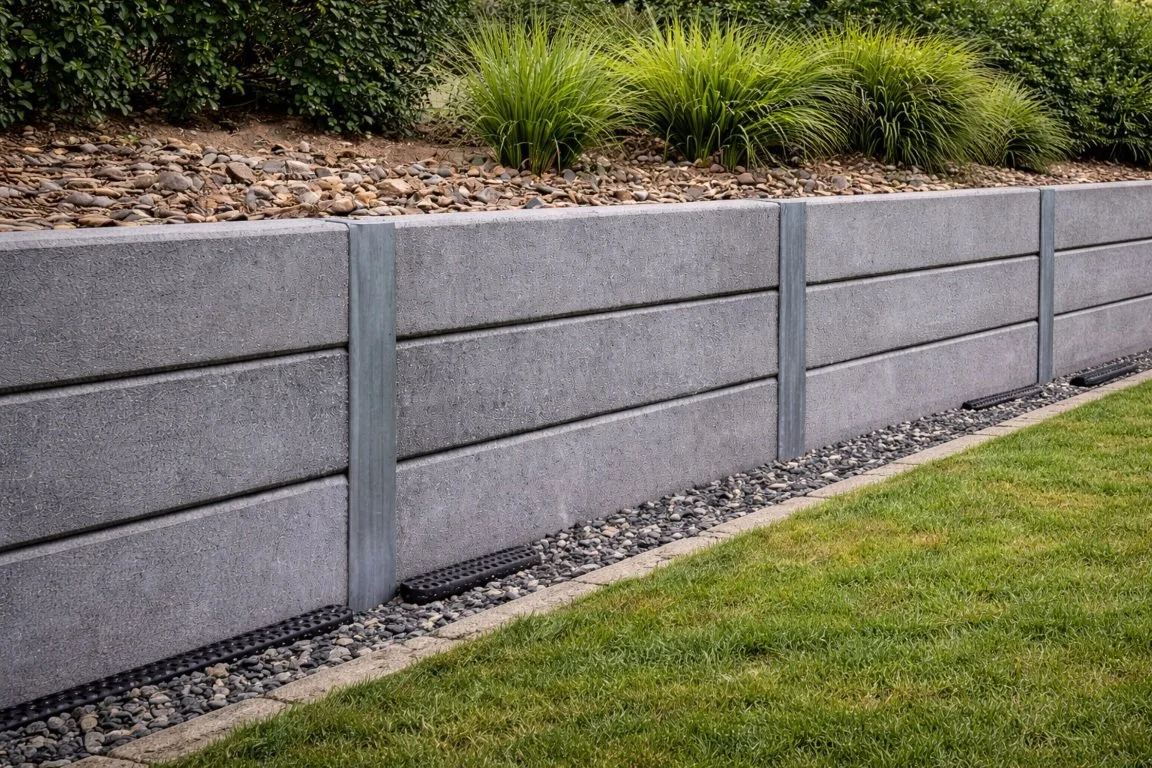
1. Long-Term Durability
Concrete sleepers are reinforced with steel and designed to withstand ground movement and moisture. Unlike timber, they don’t rot, warp, or suffer termite damage.
Many professionally installed concrete sleeper walls can last 50+ years with minimal maintenance.
If you're exploring structural options, you can learn more about professional concrete sleeper retaining walls Sydney homeowners rely on for long-term stability.
2. Strength for Sloped or Load-Bearing Areas
Concrete sleepers are ideal for:
Steep gradients
Supporting driveways
Tiered landscaping
Pool surrounds
Their structural integrity makes them suitable for engineered retaining walls where council approval may be required.
3. Low Maintenance
Concrete doesn’t require sealing, staining, or replacement of damaged boards. Occasional inspection is usually enough.
For busy Sydney homeowners, this reduced upkeep is a major advantage.
Disadvantages of Concrete Sleeper Walls
No material is perfect.
Higher upfront cost than timber
Heavier installation process
Less natural appearance (unless textured or coloured finishes are chosen)
However, when evaluated over 20–30 years, lifecycle cost often favours concrete.
Advantages of Timber Retaining Walls
Timber retaining walls are still common in older Sydney suburbs and small landscaping projects.
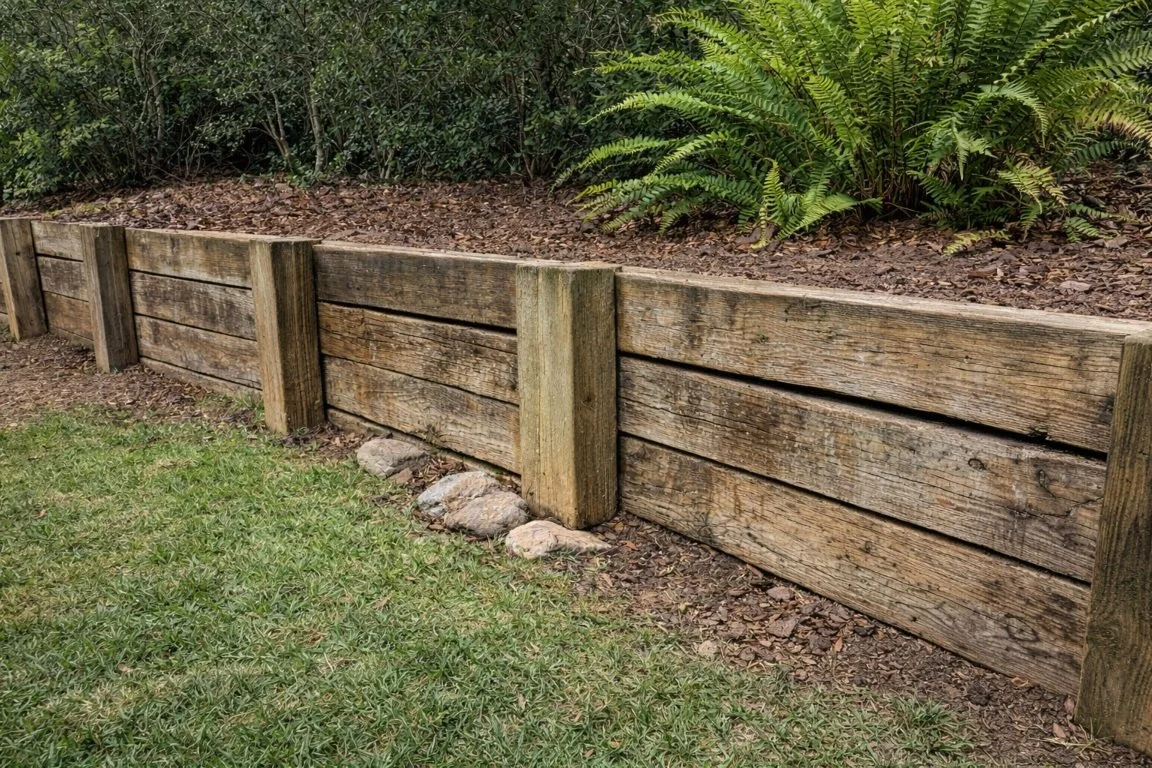
1. Lower Initial Cost
Timber sleepers are typically cheaper upfront, making them appealing for budget-conscious projects.
2. Natural Aesthetic
Many homeowners prefer the traditional look of timber in garden settings.
3. Easier Installation for Small Walls
For low garden beds or non-structural applications, timber can be quicker to install.
Timber Retaining Wall Limitations for Sydney Sites
While timber has advantages, Sydney’s environmental conditions can significantly shorten its lifespan.
Key limitations include:
Susceptibility to rot from moisture
Termite risk
Warping or splitting over time
Shorter structural lifespan (often 10–20 years)
If you're still weighing your options, understanding broader timber retaining wall limitations for Sydney sites can help you determine whether it suits your property conditions.
Which Retaining Wall Material Lasts Longer?
In most Sydney environments:
Concrete sleeper walls significantly outlast timber.
Timber may last 10–20 years depending on soil and drainage conditions. Concrete sleepers commonly exceed 40–50 years when properly installed.
For homeowners planning to stay long-term, concrete often provides better value.
Cost & Maintenance Differences for Sydney Homes
When comparing concrete and timber retaining walls, here’s how they differ:
Concrete Sleeper Retaining Walls
Upfront Cost: Higher initial investment
Lifespan: 40–50+ years
Maintenance: Minimal ongoing maintenance
Termite Risk: None
Structural Strength: High — suitable for load-bearing and engineered walls
Timber Retaining Walls
Upfront Cost: Lower initial cost
Lifespan: Typically 10–20 years (depending on soil and drainage)
Maintenance: Moderate to high (may require replacement of sleepers over time)
Termite Risk: High in many Sydney areas
Structural Strength: Moderate — better suited for lower or decorative walls
Learn how long retaining walls last in Sydney conditions and what affects each material's lifespan.
Long-Term Consideration
While timber may appear cheaper upfront, maintenance and replacement costs over time can reduce the initial savings. For many Sydney homeowners, concrete sleepers provide stronger long-term value.
For exact per-metre pricing, see our full retaining wall cost guide for Sydney in 2026.
Is Concrete Always Better Than Timber in Sydney?
Not always.
Timber may be suitable when:
The wall is under 600mm high
It’s purely decorative
Budget is extremely limited
The area has good drainage
However, for structural, load-bearing, or long-term applications, concrete is typically the safer investment.
How Long Will Timber Sleepers Last in NSW Climates?
In Sydney’s mixed clay and sandy soils:
Treated pine sleepers may last 10–15 years
Hardwood sleepers may last 15–20 years
Poor drainage can shorten lifespan significantly
Regular inspection and drainage management are essential if choosing timber.
Final Verdict: What’s Best for Sydney Homes?
For most structural retaining walls across Sydney:
Concrete sleeper walls offer superior durability
They handle soil movement better
They require far less maintenance
They deliver better long-term value
Timber still has a place in small garden applications — but for serious structural landscaping, concrete is usually the smarter long-term choice.
If you’d like personalized guidance, you can explore expert retaining wall material advice for Sydney homes to determine the best option for your block, soil type, and budget.
Key Takeaway
When comparing concrete sleeper vs timber retaining walls in Sydney, the right choice depends on:
Wall height
Soil conditions
Budget
Desired lifespan
Whether the wall is structural or decorative
But for strength, longevity, and minimal maintenance in NSW conditions, concrete sleepers generally lead.
