
How Long Do Retaining Walls Last in Sydney Conditions?
If you're planning a landscaping project or dealing with soil movement on your property, one of the first questions you’ll likely ask is: how long do retaining walls last?
Is your retaining wall reaching the end of its life? Our retaining wall builders in Sydney can assess, repair or replace it. Book a free site inspection.
In Sydney, the answer depends heavily on materials, drainage, soil conditions, and construction quality.
A properly designed and professionally installed retaining wall can last decades — but shortcuts in design or installation can reduce its lifespan significantly.
In this guide, we break down the expected retaining wall lifespan Sydney properties can expect, and what factors influence durability.
Average Retaining Wall Lifespan in Sydney
Under typical Sydney conditions:
Concrete sleeper walls: 50+ years
Reinforced concrete walls: 50–100 years
Natural stone walls: 40–80 years
Brick retaining walls: 30–50 years
Timber retaining walls (treated pine/hardwood): 15–25 years
These estimates assume proper drainage, correct engineering, and professional installation.
Sydney’s combination of clay-heavy soils, coastal moisture exposure, intense rainfall events, and temperature fluctuations means durability isn’t just about material — it’s about structural integrity.
For a more detailed explanation, read our guide on whether you need a retaining wall for a sloped Sydney block, where we break down how slope gradient, soil movement, drainage issues, and council requirements impact whether a retaining wall is necessary. The guide explains common warning signs to look for, when structural support becomes essential, and how professional design can prevent long-term damage to your property.
Working with experienced professionals in retaining walls Sydney ensures your wall is built specifically for local ground and weather conditions.
1. Engineered Concrete Sleeper Retaining Wall (Durability in Action)
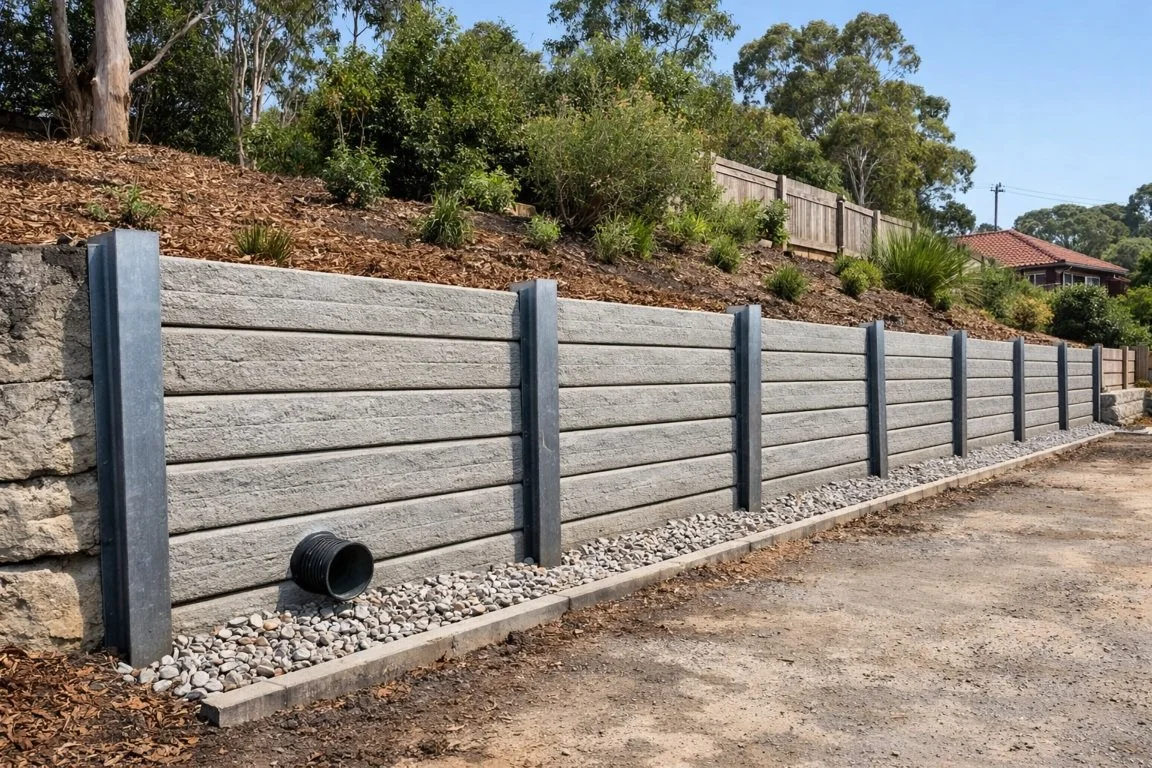
Concrete sleeper walls are one of the most durable options for Sydney homes. Designed to handle soil pressure and moisture exposure, they’re ideal for sloped blocks and reactive clay soils.
When installed with reinforced steel posts and proper footings, they commonly exceed 50 years of service life.
Why Sydney Conditions Matter
Sydney properties face several unique environmental challenges:
Reactive Clay Soils
Many areas across Western Sydney and the Hills District have highly reactive clay soils. These expand when wet and shrink during dry periods, putting pressure on retaining structures.
Without proper engineering, this movement can significantly reduce retaining wall lifespan Sydney homeowners expect.
Heavy Rainfall & Storm Events
Sydney storms can produce intense water runoff. Poor drainage is one of the leading causes of retaining wall failure.
Hydrostatic pressure builds up behind walls when water cannot escape — eventually causing cracking, leaning, or collapse.
Coastal Air & Moisture
For homes closer to the coast, salt exposure accelerates corrosion in steel components if not properly treated.
This is why professional construction matters.
2. What You Don’t See Matters Most: Drainage Systems
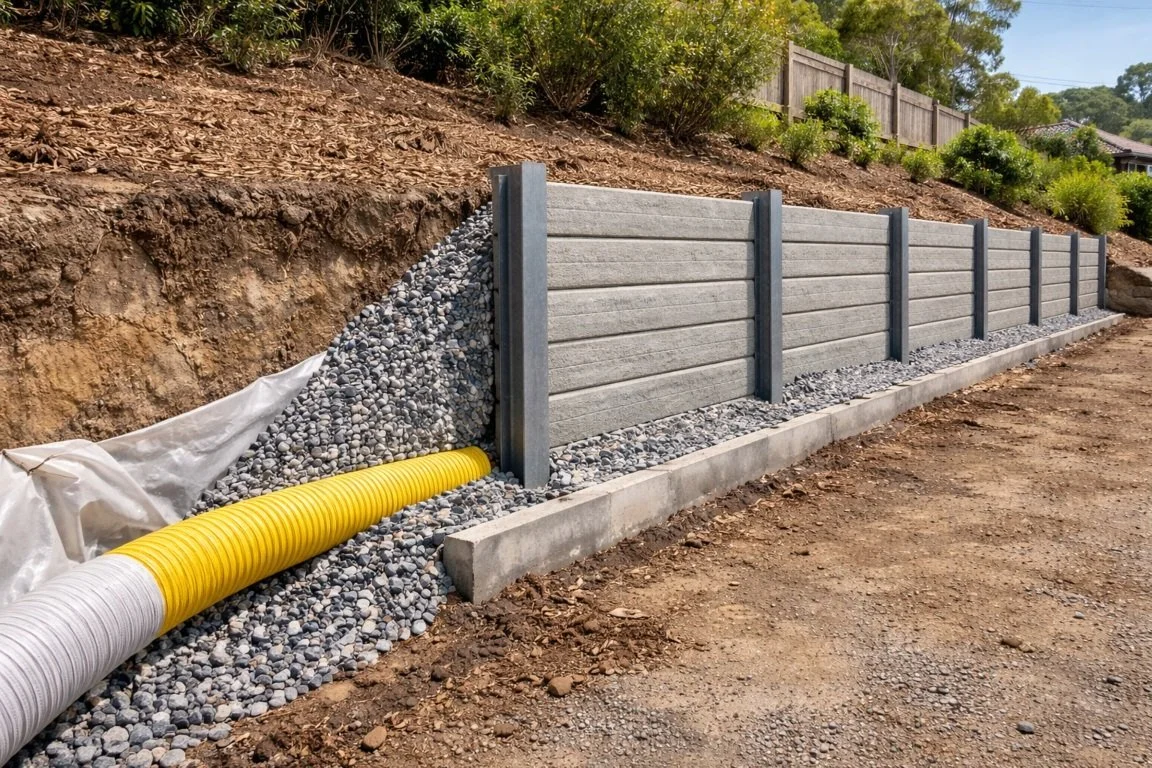
The number one factor that determines how long retaining walls last is drainage.
Even the strongest concrete wall can fail prematurely if:
There’s no agricultural drainage pipe installed
Backfill material isn’t free-draining
Waterproofing is skipped
Weep holes are incorrectly positioned
Proper site preparation and drainage design often make the difference between a 20-year wall and a 60-year wall.
That’s why professional installation of retaining walls Sydney is critical in local soil conditions.
Material Comparison: What Lasts the Longest?
Concrete Sleeper Retaining Walls
Highly durable, resistant to rot and pests.
Lifespan: 50+ years.
Reinforced Concrete
Engineered for structural strength and taller walls.
Lifespan: 50–100 years.
Natural Stone
Premium aesthetic with strong longevity.
Lifespan: 40–80 years.
Timber
More affordable but vulnerable to moisture and termites.
Lifespan: 15–25 years.
Choosing between materials? Read our comparison of concrete sleeper vs timber retaining walls for Sydney properties.
3. Timber vs Concrete: A Real-World Comparison
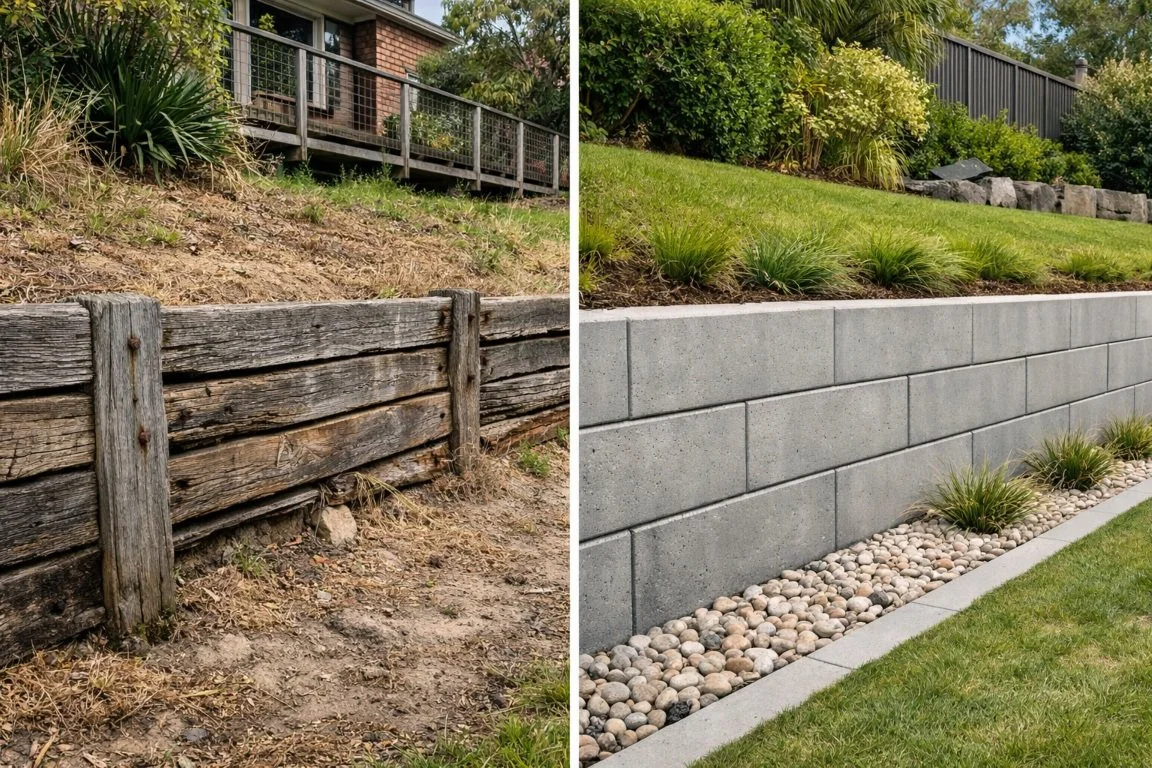
Timber retaining walls may look appealing initially, but over time they are more susceptible to:
Rot
Termite damage
Warping
Structural leaning
Concrete-based solutions consistently outperform timber in Sydney’s climate — particularly in moisture-heavy or reactive soil environments.
If longevity is your priority, reinforced concrete or concrete sleeper systems provide stronger long-term value.
Signs Your Retaining Wall Is Nearing the End of Its Life
Watch for:
Visible leaning or bowing
Cracks wider than 5mm
Bulging sections
Water pooling behind the wall
Rotting timber
Rust staining
Early intervention can extend lifespan significantly and prevent structural failure.
Can Retaining Walls Last 100 Years?
In some cases, yes — but typically only reinforced concrete or well-constructed stone walls achieve that lifespan.
Key factors include:
Engineering design
Council compliance (where required)
Deep stable footings
Correct reinforcement
Professional drainage systems
Experienced construction teams
Cutting corners reduces longevity — often dramatically.
How to Maximise Retaining Wall Lifespan in Sydney
To ensure your retaining wall lasts as long as possible:
Choose materials suited to Sydney soil
Invest in engineered design
Prioritise drainage systems
Hire experienced specialists
Maintain surface drainage
Avoid DIY structural builds
A retaining wall isn’t just landscaping — it’s structural support protecting your property.
How Long Do Retaining Walls Last?
So, how long do retaining walls last in Sydney conditions?
With proper materials, engineering, and drainage, most high-quality retaining walls last 40–100+ years.
The difference comes down to construction quality and local expertise.
Sydney’s soil movement, rainfall patterns, and coastal conditions demand experience and structural precision. Choosing professional retaining wall builders ensures your investment is built for durability — not just appearance.
If you're planning a new retaining wall or replacing an ageing structure, working with local specialists ensures long-term performance and peace of mind.
